Happy President’s Day!
It’s shaping up to be a busy week of committee work at the Statehouse as bills need to pass out of their committee of origin on Friday or be considered dead for the session.
HSB 696 makes several changes to Iowa’s safety net programs. One positive aspect is that it slightly improves the Medicaid for Employed People with Disabilities Program by expanding eligibility from 250% of the federal poverty level to 300% (about $7,000 a year more). The MEPD (Work Without Worry) program allows persons with disabilities to work and continue to have access to medical assistance.
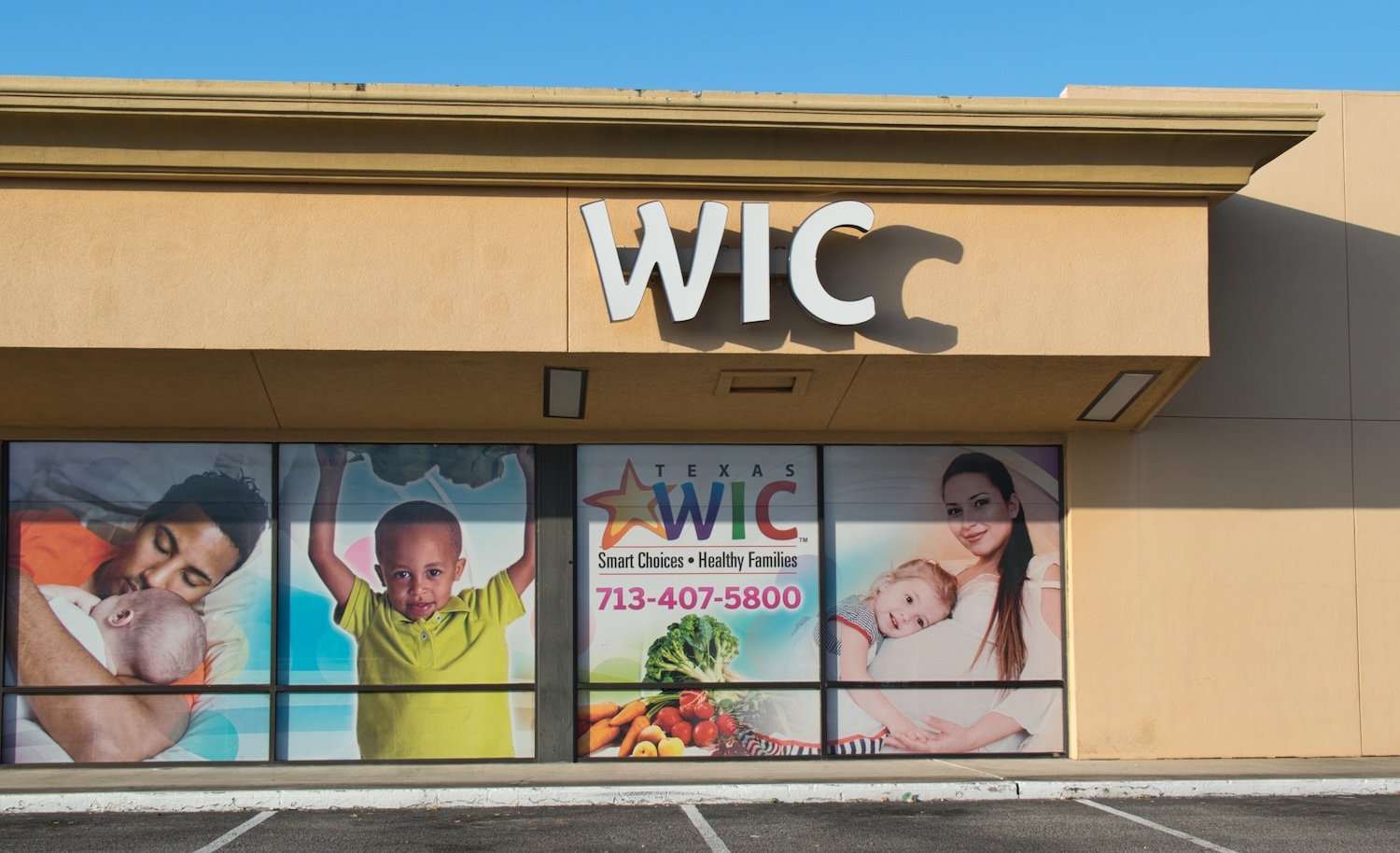
Houston, Texas USA 06-22-2025: WIC center location office building storefront exterior.
Unfortunately, HSB 696 would also take away the WIC program (nutrition for Women, Infants and Children) from persons who are undocumented or are eligible to work without being a Legal Permanent Resident. WIC is one of the few federal programs that undocumented people can qualify for if their income is low enough.
The ICC does not support the change because we want children to thrive before and after they are born and WIC helps provide essential nutrition to pregnant women and infants during their most vulnerable stages. WIC is 100 percent federally funded so cutting eligibility does not save any money at the state level. Opposing this can be seen as a part of our pro-life work to address the real challenges of having a baby by supporting women and helping meet their needs.
We encourage you to contact a member of the House Health and Human Services Committee (House Health and Human Services Committee) and ask them to make sure that WIC is not taken away from any people who qualify by reason of income.
Scheduled for Monday is a subcommittee hearing in the Senate for SF 2175, an omnibus bill which makes several positive changes in support of parental choice in education, including:
- Establishes a state revolving loan fund to help charter and nonpublic schools get cheaper money for school buildings
- Allows better access to the state preschool program for nonpublic preschools
- Includes a second sign-up period in the Fall for a parent to receive a second semester Education Savings Account
On Tuesday at 8:30 a.m., there’s a hearing for HF 2332, a bill to prohibit abortion after conception, a longtime priority of the ICC. One of our foundational principles is that human life should be protected from conception until natural death as a basic requirement of a just and moral society. The unborn child is a distinct human life with her own value, with her own DNA and with her own right to life, and right to legal protections. If you’d like to attend the hearing, we’ll see you in Room 103.
Along with the Iowa Faith and Climate Network, the ICC is also encouraging contacts in support of HSB 629 and SSB 3092 to the House and Senate Commerce Committees. The “Local Generation Act” would help establish community solar programs in Iowa, helping give an option to those who may not be able to put solar on their own homes. It would allow multiple Iowans to subscribe to a single, local solar project and receive credits directly on their utility bills.
For example, the bills would allow a parish with solar panels and a rectory on the property to share the same clean energy benefits with others. Farmers could benefit with another income stream as well. Catholic social teaching is clear that we have a moral duty to protect our common home, and solar generation can be a part of that by lessening our reliance on fossil fuels.
Here are links to the committee members:
Last week’s committee action at the State Capitol
HSB 704 passed the House Health and Human Services Committee. The bill requires abortion pills to be provided in person as well as informed consent about the possibility of a reversal of the abortion with additional medication. The proposal allows a woman or someone close to her to sue those who provided the drugs online without a prescription. It appears that 1 in 25 women who take the abortion pills ends up in the emergency room. The Senate version of the bill, SSB 3115, passed a subcommittee.
HF 864 passed the Senate Judiciary Committee. To help protect children, it would require age verification for “adult” websites, similar to what is done for gambling websites. A meta-analysis of 37 studies found that exposure to violent adult material increased a child’s odds of experiencing sexual exploitation by nearly three times.
The ICC is opposed to HSB 666, which passed the House Judiciary Committee. It changes Iowa’s law on “habitual offenders” by mandating a 20-year minimum term of commitment for certain repeat convictions. There are situations when certain habitual offenders should be locked up longer. But there also are cases when such “mandatory minimum” laws prevent judges from considering individual circumstances, leading to unjust outcomes.
Regarding HSB 666, a representative of the Iowa Department of Corrections said about 75% of the current prison population would meet the three-point criteria, and about half of people admitted to probation last year would instead face a 20-year prison sentence.
The House Judiciary Committee also passed two bills supported by the ICC: HSB 669, which specifies that raising a child in a manner consistent with their biological sex does not constitute child abuse. In some states this has caused parents to at least temporarily lose custody of their children by not agreeing with plans to “transition” the child. HF 1011 establishes specialized human trafficking prosecution units.
The ICC opposes HSB 668, which would eliminate affirmative action programs for state agencies, school licensing boards and others that were designed to correct past deficiencies in state employment. It also eliminates incentive programs for minorities and women for academic programs, as well as provisions that applicants for certain licenses are not ineligible because of citizenship. The bill has passed a House Judiciary subcommittee.
While obviously there needs to be discernment about the use of affirmative action, the U.S. bishops’ Faithful Citizenship document said, “We support judiciously administered affirmative action programs as tools to overcome discrimination and its continuing effects.”
The ICC spoke in opposition last Wednesday to HSB 705, which would label all areas where unhoused (homeless) people receive services as Drug Free Homeless Service Zones. This would include any homeless shelter. The bill imposes additional criminal penalties on program participants if they use drugs as well as, shockingly, criminal penalties for shelter staff if drug violations occur. The bill passed a House Public Safety subcommittee.
And finally,
The Iowa Migrant Movement for Justice is having an advocacy training day this Wednesday, Feb. 18 at Wesley United Methodist Church in Des Moines (800 E. 12th Street). Registration begins at 8:30 a.m., followed by an event at the Capitol at 1 p.m. Call 515-255-9809 for more information.